Eye Health Tips
Glaucoma's Early Warning Signs You Shouldn't Ignore
Glaucoma steals sight slowly and silently. Learn the early warning signs most people miss — and why catching it early makes all the difference.
Glaucoma has a reputation that is both accurate and terrifying: it takes your vision without warning. There's no pain. No dramatic moment. Just a slow, irreversible narrowing of your visual field that most people don't notice until it has already progressed significantly.
The sobering statistic is that over half of people living with glaucoma don't know they have it.
The encouraging one is that when caught early, it is almost always manageable.
Here's what to watch for — and why your next eye exam may be the most important one you've had.
What Is Glaucoma, Exactly?
Glaucoma is a group of eye conditions that damage the optic nerve — the cable that transmits visual information from your eye to your brain. The most common form, open-angle glaucoma, is caused by a gradual buildup of pressure inside the eye. Over time, that pressure damages nerve fibers, starting at the edges of your vision and moving inward.
By the time most patients notice something is wrong, 30 to 40 percent of their optic nerve fibers may already be gone. Those fibers don't grow back.
The Warning Signs Most People Miss
Because peripheral vision goes first and the brain compensates by filling in gaps, early glaucoma is extraordinarily difficult to self-detect. However, there are subtle signs worth paying attention to:
Slightly blurred peripheral vision. Not dramatic. Not sudden. Just a quiet sense that things at the edges aren't as sharp as they used to be. Many patients describe it as a fog they kept meaning to mention.
Halos around lights at night. Particularly around streetlights or oncoming headlights. This can indicate elevated eye pressure affecting the cornea's ability to manage light.
Frequent prescription changes. If your glasses or contact prescription has been shifting more than usual, it's worth having your eye pressure checked alongside your standard refraction test.
Eye pressure above 21 mmHg. This isn't something you'd feel — it's measured during an exam. High intraocular pressure (IOP) is the most significant modifiable risk factor for glaucoma. It doesn't guarantee you'll develop it, but it requires monitoring.
Headaches centered around the eye. Particularly in the mornings or after extended screen time. Angle-closure glaucoma — a less common but more urgent form — can present with sudden, severe eye pain and headaches that are sometimes mistaken for migraines.
Who Is Most at Risk?
Certain factors significantly raise your likelihood of developing glaucoma:
Family history of glaucoma — first-degree relatives carry a four to nine times higher risk
Age over 60, though risk begins rising after 40
African or Hispanic heritage, where prevalence rates are disproportionately higher
Elevated eye pressure, even without other symptoms
Previous eye injuries or surgeries
Long-term use of corticosteroid medications
If two or more of these apply to you, annual comprehensive eye exams aren't optional — they're essential.
How Glaucoma Is Detected
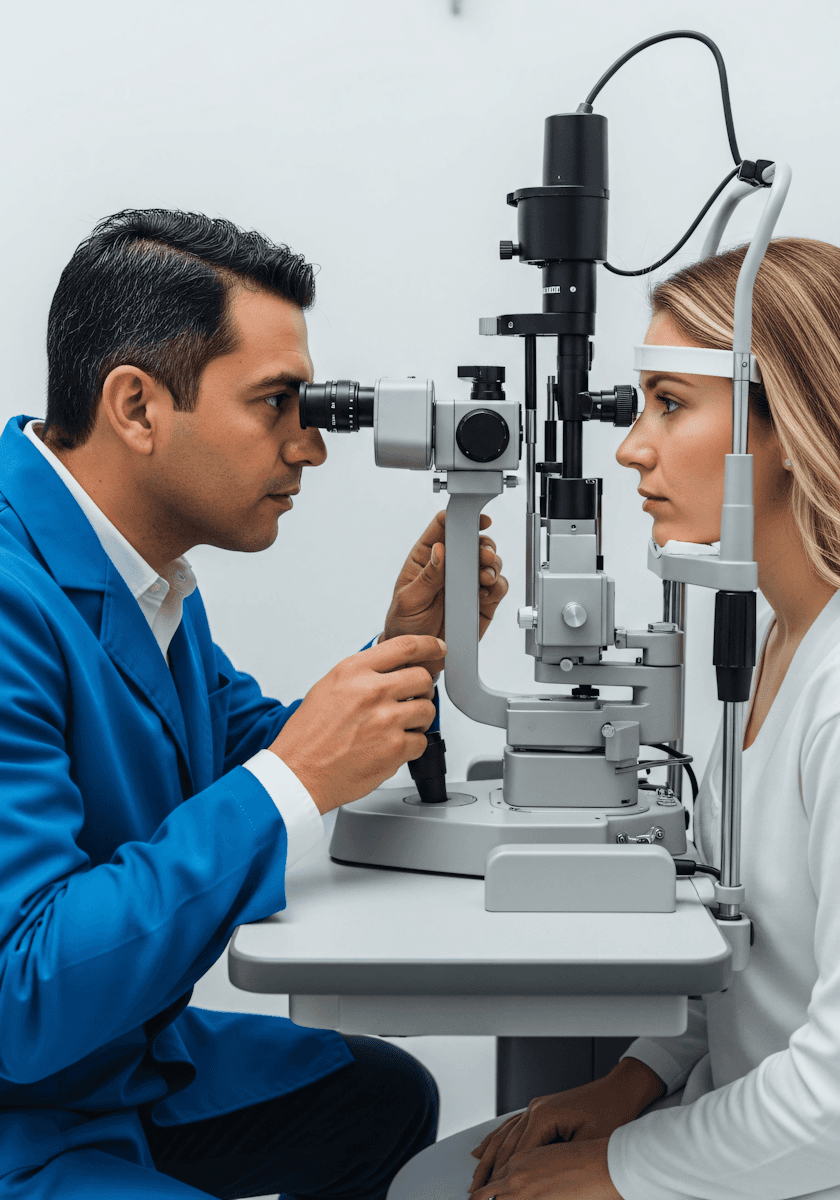
A standard vision test won't catch it. Glaucoma detection requires specific diagnostic tests, including tonometry (eye pressure measurement), optic nerve imaging, and visual field testing. At Visara, we use OCT imaging — optical coherence tomography — to detect structural changes in the optic nerve years before vision loss would otherwise be apparent.
Early detection doesn't cure glaucoma, but it gives you control. Medicated eye drops, laser therapy, or surgery can slow or halt progression almost entirely when treatment begins early.
The Most Important Thing You Can Do Today
Book a comprehensive eye exam and be honest about your family history when you do. Tell your doctor if a parent or sibling has glaucoma. Mention any of the subtle symptoms above, even if you've been dismissing them.
Written By
Harley Fenz
Refractive & Cornea Surgeon
5 min read
January 13, 2026
Concerned About Your Eyes?
Same-week appointments available. A comprehensive eye exam takes 45–90 minutes and includes a full assessment.